
The Interactions of the Five Elements in Feng Shui
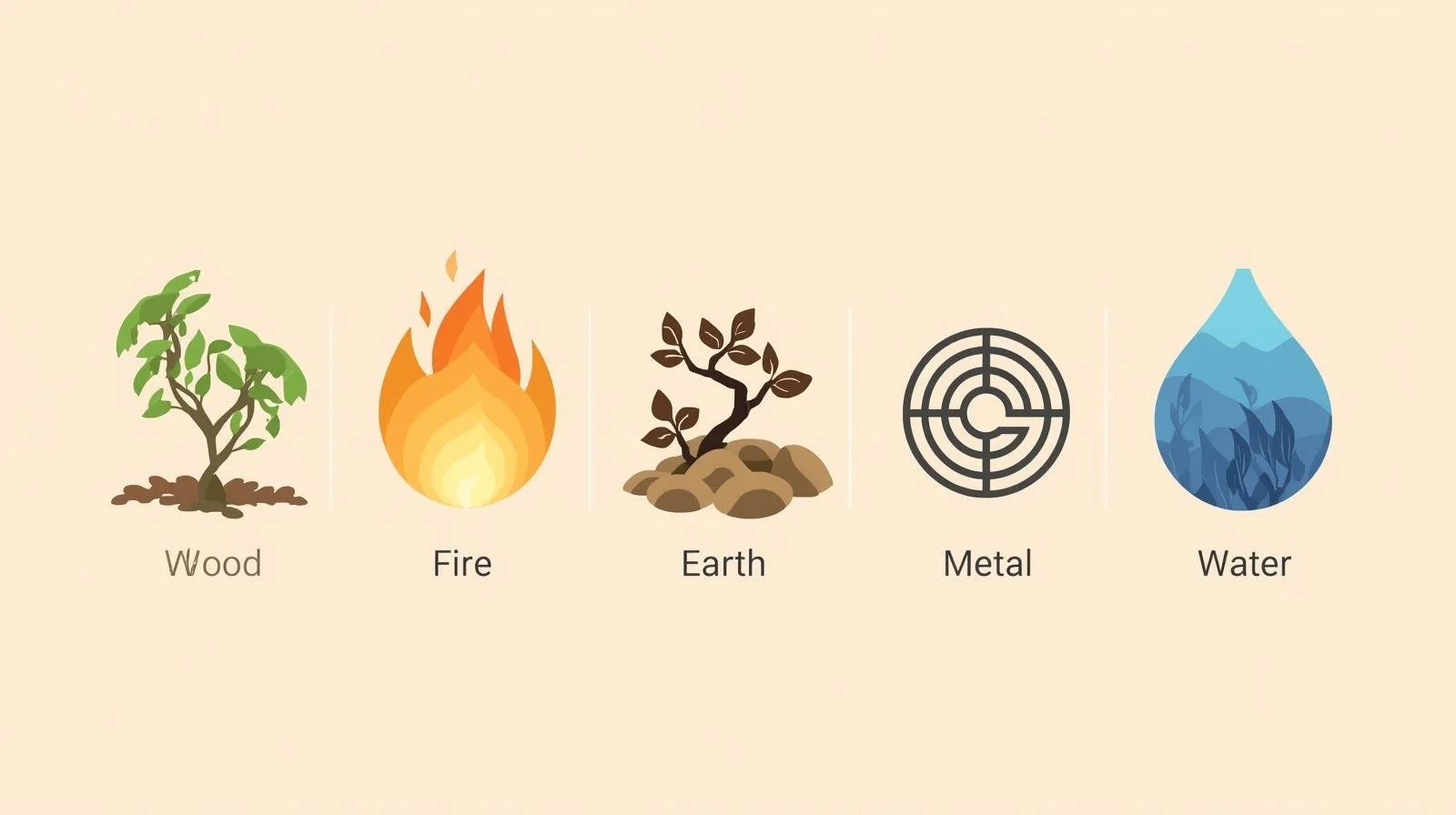
In Feng Shui, the Five Elements of Wood, Fire, Earth, Metal, and Water are seen as living expressions of universal energy, or Chi (Qi). Rather than static materials, these elements represent dynamic forces that move through nature, the human experience, and our physical environments.
Each element has unique qualities, colors, shapes, and emotional associations. Understanding how these elements interact allows Feng Shui practitioners to enhance positive energy, correct imbalances, and support specific life areas identified through the Bagua map. When the Five Elements are in harmony, Chi flows gently and continuously, supporting spiritual alignment, emotional well-being, and a deep sense of connection between our inner world and the spaces we inhabit. Their interactions reveal how energy is born, transformed, balanced, and restored. These elements interact according to three cycles: the Nourishing cycle, the Controlling cycle, and the Draining cycle.
The Nourishing cycle reflects the natural rhythm of creation and renewal:
Wood feeds Fire, offering growth and inspiration
Fire creates Earth, transforming passion into stability
Earth births Metal, forming clarity and inner strength
Metal carries Water, allowing wisdom to flow
Water nourishes Wood, returning energy to new beginnings
Spiritually, this cycle represents life’s continuous unfolding—how intention becomes action, action becomes form, and form returns to possibility. Feng Shui utilizes this cycle to enhance energy in a space by incorporating elements that naturally complement one another.
The Controlling cycle reflects nature’s wisdom in maintaining balance:
Wood stabilizes Earth, preventing stagnation
Earth grounds Water, guiding emotional flow
Water calms Fire, soothing excess intensity
Fire refines Metal, awakening purpose
Metal shapes Wood, providing direction
On a spiritual level, this cycle teaches moderation and mindfulness. In Feng Shui, it is used to restore equilibrium when energy becomes overwhelming, chaotic, or depleted by helping to gently regulate excess energy.
The Draining cycle symbolizes the spiritual act of release:
Each element gives of itself to sustain another
Energy is softened rather than forcefully controlled
This interaction reflects the Taoist principle of wu wei, or effortless action. In Feng Shui practice, this interaction is considered when an element needs to be reduced without force, allowing energy to rebalance naturally.
The Five Elements as a Path to Spiritual Harmony:
Each element carries its own spiritual essence, and a person can often embody one or more elements in their personal approach to life:
Wood embodies growth, compassion, and renewal
Fire represents illumination, passion, and transformation
Earth offers grounding, nourishment, and trust
Metal signifies clarity, intention, and sacred order
Water holds wisdom, intuition, and flow
When consciously balanced within a space, the Five Elements align the physical environment with higher energetic patterns, supporting inner peace, spiritual awareness, and harmony with the natural world.
Using the Five Elements in Feng Shui Practice:
By applying the Five Elements Theory, Feng Shui practitioners use colors, materials, shapes, décor, and placement to adjust the energy of a space. For example, adding Wood elements can encourage growth and vitality, while introducing Metal elements can enhance clarity and focus.
When the Five Elements interact harmoniously, Chi flows smoothly, supporting health, prosperity, relationships, and overall well-being. Understanding these interactions provides a practical framework for creating balanced, intentional, and energetically supportive environments.